

As the days grow longer and the sunshine returns, spring brings something many of us quietly crave: a fresh start. Windows open. Schedules shift. Energy feels just a little lighter.
It feels easier to step outside. Easier to breathe deeply. Easier to move again.
At Melaleuca Fitness, we believe healthy living does not have to be complicated or extreme. In fact, one of the most powerful health tools you own does not require batteries, a subscription, or complicated instructions. It simply requires a comfortable pair of shoes.
The benefits of walking are well documented, yet often overlooked. A consistent walking routine can support heart health, joint mobility, metabolic balance, and mental wellbeing, and it doesn’t have to overwhelm your schedule.
For busy adults balancing careers, families, and personal goals, that time dedication matters. You do not need another complicated wellness plan. You need something sustainable.
And walking is exactly that.
Why Walking Still Works
When done at a brisk pace, walking counts as moderate-intensity aerobic activity. That matters because major health organizations consistently recommend moderate movement for long-term health and healthy aging.
The Centers for Disease Control and Prevention recommends at least 150 minutes per week of moderate-intensity activity such as brisk walking, along with muscle-strengthening activity twice weekly. The World Health Organization echoes this guidance and notes that additional benefits may occur with higher activity levels.
Broken down, that is about 30 minutes five days per week. Not perfection. Not intensity for intensity’s sake. Just steady, consistent movement. And steady habits are the ones that carry us forward.
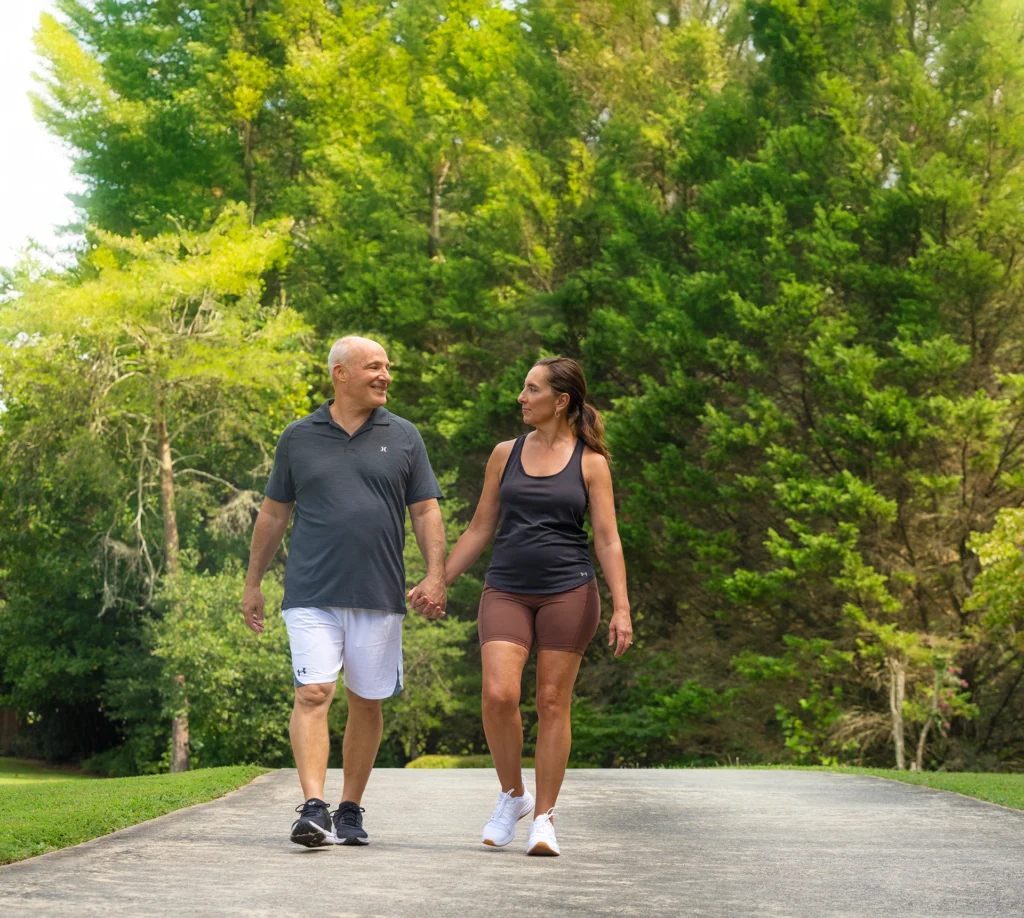
Your Heart Loves a Good Walk
Among the most established benefits of walking is its impact on cardiovascular wellness. Walking for heart health remains one of the simplest and most accessible preventive strategies available.
“People underestimate just how important it is to walk,” said Dr. Tiwaloluwa Ajibewa, assistant professor of preventive medicine at Northwestern University’s Feinberg School of Medicine, in an American Heart Association news report. He noted that simply moving more can help lower risk factors associated with heart disease and other chronic conditions.
The American Heart Association highlights walking as a practical way to support cardiovascular health and reduce risk factors linked to heart disease. Brisk walking may help support healthy blood pressure, cholesterol levels, and circulation.
You do not have to train for a marathon to support your heart. A steady daily walking habit, practiced consistently, can quietly strengthen cardiovascular health year after year. And the beauty of walking is that it does not just support one system in your body. It supports the whole.
Gentle on Joints, Strong for the Long Run
While your heart benefits from every step, your joints often appreciate walking just as much.
Walking for joint health offers movement without excessive strain, making it supportive across different life stages. For many adults, especially in midlife, joint comfort becomes increasingly important when choosing an exercise routine.
Guidelines from the American College of Rheumatology and the Arthritis Foundation emphasize exercise as a core non-drug strategy for managing osteoarthritis. Clinical guidance notes that exercise can improve pain and function in knee and hip osteoarthritis. Walking strengthens the muscles that support your joints, encourages mobility, and helps maintain functional movement over time. It is movement that meets you where you are.
Supportive shoes, a gradual increase in time, and consistency matter far more than speed.
Supporting Metabolic Health, One Step at a Time
Beyond heart and joint health, walking also supports your body’s metabolic balance.
Walking for metabolic health plays a meaningful role in blood sugar regulation, weight management, and overall cardiovascular risk reduction. A consistent daily walking habit can help stabilize energy throughout the day, something many people notice quickly.
A systematic review of walking interventions in individuals with type 2 diabetes found that regular walking improved glucose control and supported cardiovascular risk factors such as body weight and blood pressure.
Research summarized in JAMA has also reported that a faster walking pace was associated with lower risk of type 2 diabetes. Incorporating brief periods of brisk walking may enhance these metabolic benefits. Even a short walk after meals can support healthy blood sugar levels. Small efforts, repeated consistently, create meaningful change.
But perhaps the most immediate benefit is not something you measure on a lab report.
The Benefit You May Feel First (No Prescription Required)
After supporting your heart, protecting your joints, and strengthening metabolic health, walking offers one more gift. You often feel it sooner than you expect.
The benefits of walking for mental health are increasingly supported by research. A 2024 systematic review and meta-analysis published in JMIR Public Health and Surveillance concluded that walking interventions were effective in reducing symptoms of depression and anxiety. The researchers wrote that walking “can be adopted as an evidence-based intervention” for supporting mental health.
Additional reporting from UCLA Health on large-scale step research found that “walking even short distances benefits mental health,” including mood and emotional wellbeing. Many people describe this shift before they ever read the studies.
“I started walking during my lunch break just to get outside,” said one Melaleuca Fitness member. “It has become the best part of my day. I come back clearer and more focused.”
A walk can become a reset button. A boundary between responsibilities. A few uninterrupted minutes that belong entirely to you. And sometimes, that may be the most valuable benefit of all.

Step Into Spring with Melaleuca Fitness
At Melaleuca Fitness, we see it every day. The simplest habits often create the strongest results.
Walking can become family time in the evening. A walking meeting with a colleague. A quiet moment before the house wakes up. A consistent spring walking routine can anchor your week and support heart health, joint comfort, metabolic balance, and emotional clarity all at once.
This season, consider strengthening your daily walking habit. Invite a friend. Put it on your calendar. Let it become a commitment not just to movement, but to yourself. The steps may feel small at first. But step by step, they build something powerful.
This spring, do not just admire the sunshine. Step into it. Let’s walk into better health together.
A Simple Spring Walking Plan
If you are ready to experience the benefits of walking firsthand, begin gradually and build momentum.
Week 1
10 to 15 minutes
Four days this week
Week 2
15 to 20 minutes
Four to five days this week
Week 3
Add 5 to 10 minutes of brisk walking within your routine
Week 4
Work toward 150 minutes of walking per week
Focus on consistency. Sustainable habits create lasting health.

Frequently Asked Questions About the Benefits of Walking
How much walking do I need to see health benefits?
To experience measurable health benefits, adults should aim for at least 150 minutes per week of moderate-intensity activity such as brisk walking. That equals about 30 minutes five days per week. Even shorter walks contribute when practiced consistently.
Is brisk walking better than slow walking?
Brisk walking generally provides greater cardiovascular and metabolic benefits than slow walking. A pace that raises your heart rate while still allowing conversation supports heart health and blood sugar regulation.
Can walking really improve mood and mental health?
Yes. Research shows that walking for mental health can reduce symptoms of depression and anxiety. Even short daily walks have been associated with improved mood, lower stress levels, and stronger emotional wellbeing.
Is walking safe if I have joint pain?
For many individuals, walking for joint health is both safe and recommended. Clinical guidelines for osteoarthritis emphasize exercise as a key non-drug strategy to improve function and reduce discomfort. Start gradually and consult your healthcare provider if needed.
When is the best time of day to walk?
The best time to walk is the time you can maintain consistently. Morning, midday, or evening walks all provide meaningful health benefits. Choose the time that fits your routine and supports a sustainable daily walking habit.